
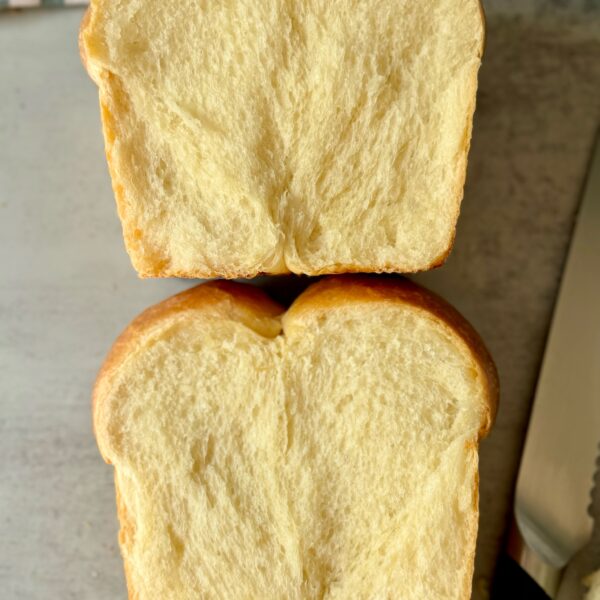
Sourdough Brioche by Hand (no mixer needed!)
This rich and decadent sourdough brioche recipe is incredibly soft and designed to be easily made by hand!
Equipment
- Mixing bowl
- Food scale
- Silicone scraper tool
- 9x5 loaf pan
Ingredients
For the sweet levain
- 15 grams sourdough starter (fed within 12-24 hours)
- 15 grams sugar
- 50 grams water
- 50 grams all-purpose flour
For the dough
- 100 grams milk
- 50 grams sugar
- 100 grams sweet levain (from above)
- 3 medium eggs (150 grams) (brought to room temp & see notes)
- 450 grams bread flour
- 10 grams salt
- 113 grams unsalted butter (softened)
For the egg-wash
- 1 beaten egg
- 1 teaspoon water
Instructions
Make the sweet leavin
-
The evening before the dough is mixed, add the sourdough starter, sugar, and water to a clean jar. Stir until the starter and sugar dissolve and the water becomes milky.
-
Next, add the flour and stir until there are no dry bits of flour left. Loosely cover the jar and allow the levain to rest for 10-12 hours.
Mix the dough
-
This dough can be mixed by hand or a stand mixer.
*Ensure the sweet levain has doubled in size before mixing the dough.
Warm the milk in the microwave for 30-45 seconds and add it to a mixing bowl. Stir in the sugar and sourdough starter until dissolved.
-
Next, add in the 3 eggs and ensure they weigh around 150 grams. If they exceed this, plan to add in (5-10 grams more of bread flour).
-
Lastly, add the bread flour, salt, and half of the softened butter (56 grams). Mix until the dough comes together and no dry bits of flour are visible.
-
Cover with plastic wrap and let it rest for 30-45 minutes.
Mix in the remaining butter
-
After the dough has rested, take the remaining softened butter and start by spreading it over the top of the dough and dimpling it in while still in the bowl.
-
Then, place it on a clean work surface and start to knead the butter into the dough by folding the dough into itself repetitively. Try not to use more than a tablespoon of flour during this process.
-
During the kneading process the dough is going to get stickier and the butter will be all over the work surface. Use a dough scraper to clean it up and put it back into the dough. See pictures & videos above.
-
The kneading process takes about 8-10 minutes. If the dough starts to tear at any point, allow it to rest for 5-10 minutes before returning to it. Also if you simply need a break, let the dough rest. It becomes easier to knead after resting.
-
The dough has been properly kneaded once it is no longer sticky and is smooth. Once this has been achieved place it in a buttered bowl and cover it for 45 minutes.
Stretch and fold the dough
-
To ensure optimal gluten development perform 1 stretch and fold after it has rested. Then cover it and allow it to rise in the warmest spot in your kitchen (do not place it anywhere over 80 degrees F as you don't want the butter to melt out of the dough).
Second bulk rise
-
Once the dough has doubled in size (mine took 8 hours at 73 degrees F) place it in the refrigerator overnight (the dough can be refrigerated for up to 24 hours).
-
If you would like to shape and bake the same day, refrigerate the dough for at least 2 hours before shaping. It makes it much easier to work with.
Shape and second rise
-
The following morning remove the dough from the refrigerator and place it onto a clean work surface.
-
Weigh the dough and divide it into 6 equal pieces. Shape each piece into a ball by pinching the seams together and rolling it on the counter.
-
Place each ball into a buttered loaf pan. They can be squeezed in using a dough scraper or your hands. Don't be afraid to mold them to ensure they fit, they will even out during their second rise.
-
Lastly, cover the pan with oiled plastic wrap and allow it to rest in the warmest spot in your kitchen. Tip: place it in your oven with the light on.
-
The dough is ready once it has risen well above the rim of the pan, is puffy, and soft to the touch. This can take 6-8 hours depending on the temperature. It is important to allow it to rise the necessary time before baking.
Brush & Bake
-
Once the dough has finished its second rise, preheat the oven to 350 degrees F.
-
Mix together the egg-wash and brush the dough with it and bake for 35-40 minutes or until it turns golden brown.
Sourdough brioche is fully baked when the internal temperature reaches 190–195°F (88–90°C)—this ensures it's cooked through while remaining soft and tender.
-
Upon removing the sourdough brioche from the oven, brush the crust with butter to make it softer. Allow the dough to rest for 10 minutes in the pan before transferring it to a cooling rack. Let it cool completely before slicing (1-2 hours).
-
Sourdough brioche is best enjoyed on the same day, but can last up to 3 days in an airtight container or bread bag on the counter.
Notes
Baker's schedule: Day 1: make the sweet levain the evening before the dough is mixed.
Day 2: Mix the dough, allow it to ferment, and place it in the refrigerator overnight
Day 3: Shape the brioche bread, let it rise, and bake.
Fermentation times can vary due to temperature, watch the dough, not the clock.
Eggs: If the eggs exceed 150g, plan to add 5-10 grams of additional bread flour.
